
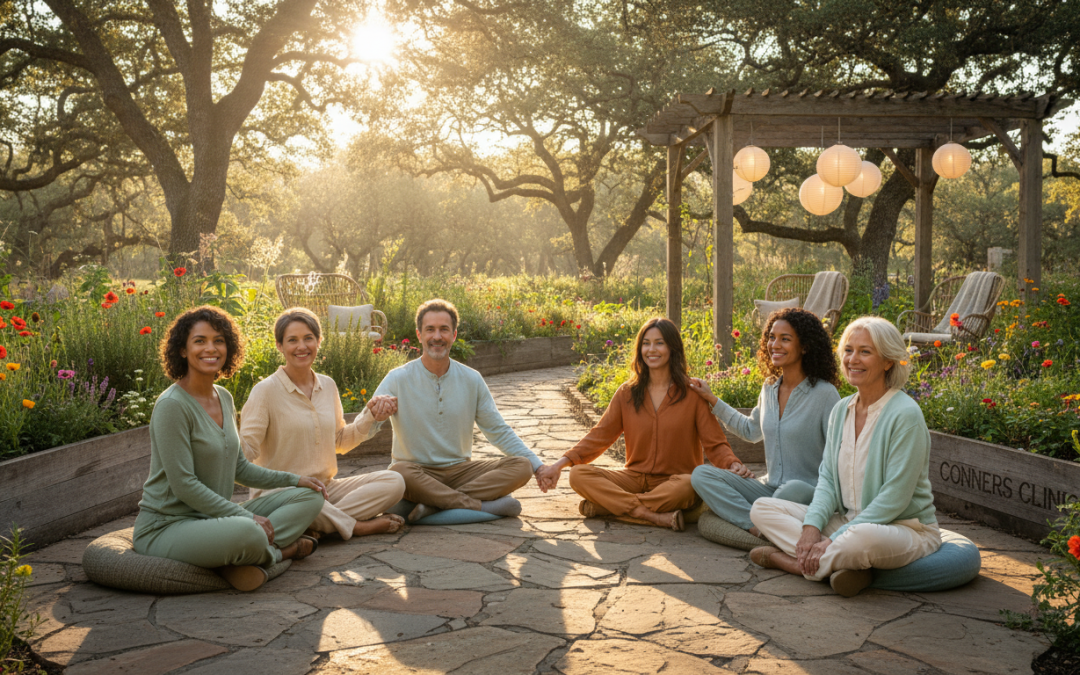
I remember a patient, let’s call her Sarah, sitting in my office just days after her diagnosis. The world she knew had vanished, replaced by a whirlwind of medical jargon and daunting treatment schedules. She felt lost, as if she were merely a passenger on a terrifying ride.
That moment is why I created this guide. My goal is to help individuals like Sarah navigate their path toward recovery. I combine proven methods with compassionate, expert-led clinical support to address the full spectrum of challenges.
At Conners Clinic, we understand that healing extends beyond a single therapy. It involves nurturing the mind, body, and spirit. We integrate traditional wisdom with modern medical insights to build a personalized framework for your journey.
You are not just a patient; you are the central figure in your own story of wellness. My mission is to ensure you feel empowered and informed as you make decisions about your long-term health. Together, we can move from a place of fear to one of active, hopeful participation.
Key Takeaways
- A cancer diagnosis can create profound feelings of uncertainty and overwhelm.
- Integrative approaches that address physical and emotional needs are crucial for recovery.
- Personalized care plans honor your unique path and experiences.
- Combining time-tested wisdom with contemporary science offers a powerful healing strategy.
- Feeling informed and in control is a vital part of improving your overall well-being.
- Expert guidance can help you transition from feeling like a passenger to being the driver of your health journey.
- You are not alone; finding the right clinical partnership is a critical step forward.
Integrative Approaches to Cancer Care
Research continues to validate the importance of addressing both mind and body during cancer therapy. This approach moves beyond standard treatment to improve overall well-being. It focuses on managing symptoms and enhancing your quality of life.
Mind-Body Therapies: Meditation, Yoga, and Tai Chi
Mind-body practices offer powerful tools for recovery. Meditation, particularly the eight-week mindfulness-based stress reduction (MBSR) program, is a proven therapy. It significantly lowers stress and promotes deep relaxation.
Yoga builds physical strength and improves mood. Studies show it enhances quality of life for many people undergoing treatment. Gentle movements in Tai Chi also provide similar benefits for the body and mind.
Herbal Supplements and Alternative Strategies
When exploring herbs and supplements, professional guidance is essential. I always recommend discussing potential effects with your doctor. This ensures they won’t interfere with your prescribed medicine.
Services like the MSK Integrative Medicine Service provide evidence-based recommendations. They help integrate safe alternatives into a standard cancer care plan. At Conners Clinic, we carefully blend these strategies to support your unique journey.
Holistic Support for Cancer Survivors: Integrative Strategies for Healing
Pain and nausea don’t have to dominate your life. Evidence-based complementary therapies provide a path to better comfort. I see many individuals find significant relief through specific, time-tested practices.
These strategies address common physical challenges after medical treatment. They aim to improve your daily function and overall well-being.
Acupuncture, Acupressure, and Pain Management
Acupuncture and acupressure are ancient Chinese medicine practices. Modern research confirms they can relieve tough symptoms like neuropathy, persistent pain, and nausea.
Studies show acupuncture offers modest but real pain improvements. This can be crucial for managing discomfort linked to therapy.
These techniques work by stimulating specific points on the body. The goal is to restore balance and promote the body’s natural healing response.
| Symptom | How Acupuncture Helps | How Acupressure Helps |
|---|---|---|
| Neuropathy | May improve nerve function and reduce tingling. | Provides direct pressure to soothe sensitive areas. |
| Chronic Pain | Triggers the release of natural pain-relieving chemicals. | Offers immediate, on-the-spot tension relief. |
| Nausea | Calms the digestive system and reduces queasiness. | Applying pressure to the wrist can settle the stomach. |
| Sleep Disturbances | Promotes relaxation and regulates sleep cycles. | Evening self-massage can encourage better rest. |
Therapies Backed by Research and Evidence
I prioritize methods with solid scientific backing. This ensures your integrative plan is both safe and effective.
Many cancer patients use these practices to manage physical pain and stress. It becomes a vital part of their ongoing care.
Incorporating acupuncture can relieve side effects of conventional medicine. It also helps build your inner strength during recovery.
Remember, while herbs and supplements have benefits, professional guidance is key. At Conners Clinic, our focus is on evidence-based support for your confident healing journey.
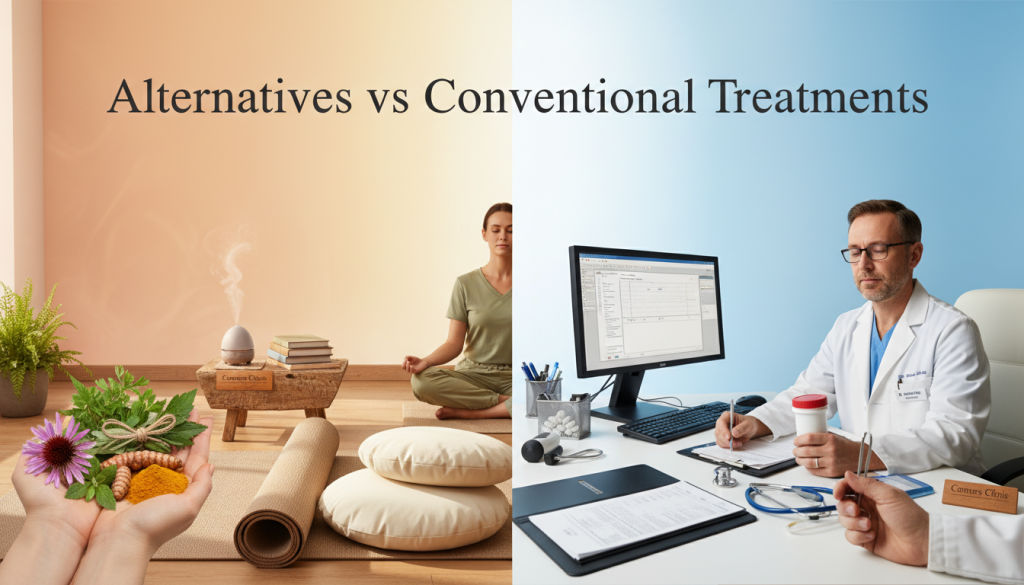
Alternatives vs. Conventional Treatments: Navigating Your Options
Choosing between conventional medicine and alternative approaches is a critical decision that impacts long-term health. I’ve seen how a lack of clear information can lead to risky choices.
For instance, Dr. Julie Gralow, an oncologist, treated a patient who refused chemotherapy for unproven methods. This decision allowed the disease to progress. Education is the cornerstone of safe, effective care.
Comparing Standard Medical Care and CAM
Conventional treatments like chemotherapy are backed by rigorous clinical trials. Complementary and alternative medicine (CAM) includes practices like meditation or herbal supplements.
Dr. Heather Greenlee’s study of 685 women with breast cancer provides insight. It shows how a diagnosis influences choices. Research indicates 11 percent of patients may delay or skip proven therapies.
Understanding this balance is vital for your well-being.
Making Well-Informed Treatment Decisions
Open communication with your doctor is non-negotiable. Discuss the benefits and risks of any therapy you consider.
While some people explore natural options, monitoring your health closely prevents progression. Managing the stress of a diagnosis requires a clear plan.
I encourage you to visit Conners Clinic to learn about balancing integrative strategies with necessary medical care. Your path to healing deserves informed, confident steps.
Real Life Experiences and Expert Recommendations
Real-world stories from individuals and experts offer powerful insights into navigating treatment decisions. Hearing how others managed their journey provides both comfort and practical strategies.
Patient Stories and Shared Journeys
Cortney Campbell was diagnosed with stage 2 Hodgkin disease in 2008. She successfully navigated her path by partnering with an oncologist who provided supportive care and close monitoring.
Her story shows the value of a strong clinical relationship. Other individuals share similar journeys. For example, reading about a holistic approach can offer hope and ideas.
These narratives give strength to people facing a diagnosis. They remind us that we are not alone.
Advice from Oncologists and Integrative Practitioners
Medical experts emphasize the need for evidence-based care. Dr. Bart Scott, a medical oncologist, reports a trend.
He notes that 20 to 25 percent of his patients now consider refusing conventional treatment for natural therapies. This highlights the importance of professional guidance.
Whether using acupuncture, herbs, or meditation, always discuss these practices with your doctor. This helps manage potential side effects and ensures safety.
Open communication allows for monitoring and integrates research-backed recommendations. At Conners Clinic, we believe combining the best of both worlds is effective.
This approach manages symptoms and improves quality of life for many cancer patients.
Embracing a Holistic Lifestyle for Sustained Healing
Long-term healing is built on daily choices that reinforce your body’s innate capacity for recovery. This commitment extends far beyond initial medical treatment.
Integrating practices like meditation and yoga creates a sustainable approach to maintaining well-being. These methods manage stress and improve overall quality of life.
Personalized balance is essential. As noted in research on holistic healing, lifestyle factors significantly impact long-term outcomes for people after cancer.
For tailored guidance, explore our personalized memberships. We provide the framework to navigate your unique path with confidence and lasting success.
FAQ
What are the most effective mind-body practices for managing stress after a cancer diagnosis?
I often recommend meditation and gentle yoga. These techniques help regulate the nervous system, promoting deep relaxation and mental clarity. They can significantly improve your emotional resilience and overall quality of life during and after medical treatments.
Are herbal supplements safe to use alongside chemotherapy or radiation?
It’s crucial to discuss any supplement with your oncology team. Some herbs can interact with medicines, affecting their efficacy or increasing side effects. A qualified integrative practitioner can help identify evidence-based options that support your body’s strength without interfering with your primary therapy.
How can acupuncture help with treatment-related symptoms like nausea or pain?
Acupuncture works by stimulating specific points to promote the body’s natural healing response. Research shows it can be very effective for reducing chemotherapy-induced nausea and managing chronic pain. It’s a valuable tool for improving comfort and sleep without additional medications.
Should I choose between conventional treatments and complementary approaches?
This isn’t an either/or decision. The most effective strategy is integrative care, where proven complementary therapies work *with* standard treatments like chemotherapy. Your goal is to build a collaborative team—including your oncologist and a certified CAM practitioner—to create a personalized plan.
What lifestyle changes have the biggest impact on long-term healing and wellness?
Focus on foundational pillars: nutrition tailored to your needs, consistent gentle movement like walking or Tai Chi, quality sleep hygiene, and cultivating a strong social support network. These elements work synergistically to reduce inflammation, boost energy, and enhance your body’s innate capacity for recovery.