

Mark, a 52-year-old teacher, described the moment he heard the words as his world stopping. His mind immediately raced to survival mode, focusing only on the next medical appointment and procedure. This shift is a common, almost universal, experience for individuals facing a serious health challenge.
As an expert in integrative oncology, I see this pattern often. Dr. April Hirschberg and Dr. Rachel Millstein of the Mass General Brigham Lifestyle Medicine Program note that people frequently feel completely overwhelmed during this difficult period. Navigating this journey requires more than just clinical treatments.
I believe caring for your mental and emotional state is just as crucial for your overall wellness. The goal is to provide you with effective resources and a supportive care team. These tools help you regain a sense of control and feel more like yourself during this time.
Key Takeaways
- A serious diagnosis can profoundly disrupt daily life and trigger a survival-focused mindset.
- Feeling overwhelmed is a normal and common reaction to this kind of health news.
- Addressing your mental and emotional well-being is a vital component of comprehensive care.
- Expert guidance can help you navigate the treatment process with more clarity and resilience.
- Integrative strategies that blend medical and supportive practices offer a powerful path forward.
- Your personal support system and clinical team are essential resources for your journey.
- Practical tools and approaches are available to help you cope and improve your quality of life.
Understanding the Impact of Cancer-Related Stress
Receiving a serious health diagnosis can trigger a cascade of physiological and emotional responses that extend far beyond the initial shock. I often explain to individuals that this reaction is rooted in our biology. Standard medical textbooks suggest that 50 to 80 percent of all disease may have stress-related origins.
This connection is vital to understand. When the fight-or-flight response activates, it floods your system with hormones like adrenaline.
This state, if sustained, can influence your overall wellness during a challenging period.
Exploring the Physical, Emotional, and Social Dimensions
The effects are multidimensional. Physically, you might experience fatigue or pain. Emotionally, feelings of anxiety or depression are common and valid.
These changes can also affect how you connect with friends and family. It’s a whole-person experience.
How Stress Can Affect Treatment and Recovery
Navigating this journey well involves your clinical care team. They should offer clear information to help you process complex thoughts.
As noted by experts like Dr. Rachel Millstein, addressing these factors is a key part of improving your quality of life. Understanding this mind-body link provides a foundation for resilience.
Working with your team, you can find resources and strategies that support your entire path forward.
Effective stress management for cancer patients: Practical Techniques
Focusing on your breath is a foundational tool that can steady your nervous system amid uncertainty. I guide individuals toward simple, evidence-based methods that foster resilience.
Deep Breathing and Mindfulness Practices
Mindfulness, as Dr. Rachel Millstein notes, is paying attention to the present moment without judgment. Even brief periods of focused breathing can calm your thoughts.
This practice directly soothes the body‘s fight-or-flight response. I recommend making it a daily habit during your cancer treatment.
Creating Calming Daily Routines
Structure brings comfort. Calming routines, like journaling or listening to music, are powerful ways to improve your health.
Your care team can help you choose tools that fit your life. The goal is a supportive group of habits, not perfection.
| Activity | Primary Benefit | Suggested Time |
|---|---|---|
| Guided Breathing | Reduces immediate anxiety | 5-10 minutes |
| Gratitude Journaling | Shifts focus to positive thoughts | 5 minutes |
| Gentle Walking | Releases tension, boosts mood | 15-20 minutes |
| Listening to Calm Music | Creates a peaceful environment | 10-30 minutes |
Dedicating time to these things is an active part of your journey. Gentle exercise, approved by your team, also makes a difference.
Exploring Alternative Cancer Treatment Options
Navigating a serious diagnosis often leads people to seek out additional strategies that support their body’s innate resilience. This exploration is a natural part of taking an active role in your own healing journey.
I often discuss with individuals how specialized centers, like Conners Clinic, focus on the whole person. Their philosophy centers on comprehensive healing that addresses more than just the physical disease.

This holistic view is a vital part of a modern approach to health. It recognizes that effective care involves multiple dimensions of well-being.
Integrating Mind-Body Approaches with Conventional Care
Combining different modalities can create a powerful, balanced path forward. Many find that integrating these treatments with standard cancer treatment offers a more complete support system.
The team at Conners Clinic provides a group of therapies designed for both physical and emotional needs. This integrative model opens new ways to improve your quality of life.
I encourage you to explore these resources. Working with a knowledgeable team is essential for achieving the best possible outcomes.
Identifying Stress Triggers and Early Signs
Lawrence LeShan’s groundbreaking research revealed a profound link between emotional history and physical health. He studied over 500 individuals facing a cancer diagnosis and found a distinct emotional life-history pattern in 76 percent. This shows how our past can shape our current health.
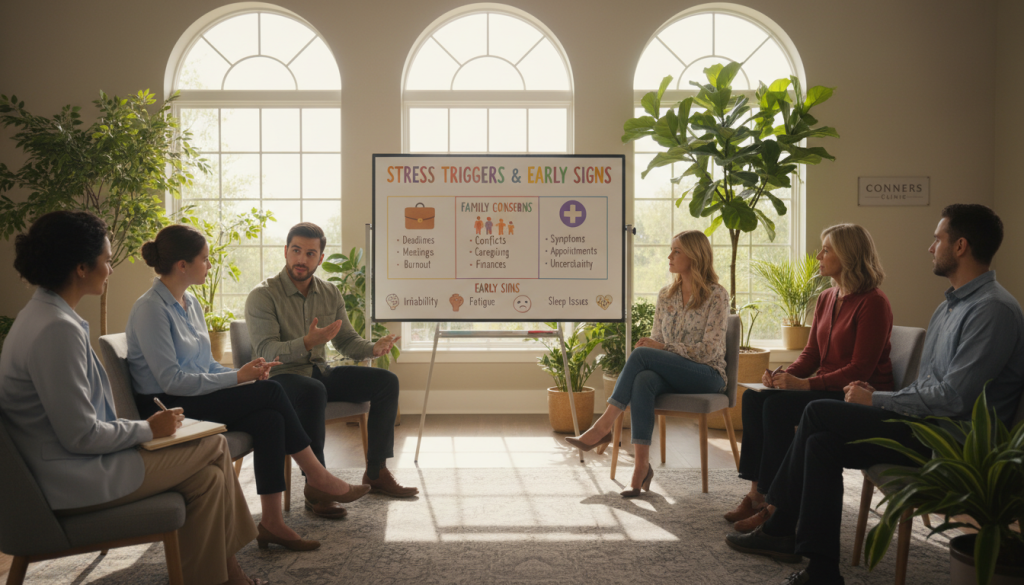
Recognizing your personal triggers is a key part of navigating this journey. I often see that anxiety or persistent negative thoughts are common emotional symptoms. Depression can also surface, signaling that your mind needs extra support.
Recognizing Emotional Symptoms and Thoughts
These feelings are not just in your head. They are valid responses that affect your whole body. Acknowledging them is a critical point for improving your quality of life.
Managing Physical Manifestations and Pain
Emotional distress often manifests physically. Many people report unexplained pain or sleep problems. These are early signs your system is under strain.
I recommend keeping a simple journal of your emotions and daily activity. Share this information with your family and friends. They can help you spot changes.
Your clinical care team is a vital resource. They can provide strategies to manage these problems. Together, you can develop a group of approaches to address triggers early.
Building a Support System: Leveraging Professional and Social Resources
A robust support system, blending professional guidance with personal connections, can significantly ease the burden of a serious illness. You do not have to face this path alone.
Creating this network is one of the most effective ways to navigate your journey with more resilience.
Engaging Your Care Team for Guidance
Your clinical care team is your primary source of information. They can help you understand your treatment plan and connect you with vital resources.
Social workers and patient navigators, for example, assist with practical things like transportation. This help makes a real difference in daily life.
Connecting with Peer and Family Support Groups
I encourage you to seek out a group where you can talk openly. Sharing your feelings with others who truly understand is powerful.
This includes family and close friends. Their emotional support is a key part of maintaining your mental health.
Utilizing Palliative Care and Additional Resources
Palliative care is provided by specialists who work with your oncology team. They manage physical side effects like pain and emotional distress.
Studies show that people who access this care often have a better quality of life. It addresses the problems that cause significant distress.
By working with your dedicated team, you ensure a comprehensive group is focused on your well-being.
Holistic Tools for a Balanced Mind-Body Approach
Many individuals find that incorporating gentle, mindful practices brings a sense of peace and strength to their daily routine. This balanced approach recognizes that your mental and physical states are deeply connected.
I recommend mindfulness-based activities like yoga, tai chi, and meditation. Studies show these practices can improve mental distress for people during their cancer journey.
Incorporating Relaxation Techniques and Gentle Exercise
Progressive muscle relaxation is another proven tool. It systematically reduces physical tension that often accompanies medical treatment.
Gentle movement is one of the best ways to release built-up strain. Regular, approved exercise helps maintain physical strength and boosts mood.
These mind-body treatments provide a group of techniques that calm your body. By dedicating time to them, you take an active role in your care.
It’s important to find the tools that work for you. A balanced plan, combining these methods with clinical health strategies, supports long-term wellness.
Moving Forward with Resilience and Renewed Hope
Your path forward is built on the resilience you’ve cultivated and the supportive network you’ve assembled. I see this as a powerful foundation for your ongoing journey. Utilizing the resources and guidance from your care team strengthens this process over time.
You have the strength to navigate your path. Many groups and tools are available to help you maintain your health. Staying connected with your support network makes a real difference.
Focusing on your body and mind can lead to renewed hope. This holistic care approach improves your overall quality of life. It empowers you during your treatment.
Your clinical team is there for you every step of the way. For continued guidance on cultivating optimism, explore resources for finding hope. This can be a vital part of your plan.
Remember, you are not alone in this process. With the right care and a dedicated group, you can move forward with confidence. Your resilience is your greatest asset.
FAQ
How does stress specifically impact a person’s body during cancer treatment?
When you experience ongoing anxiety, your body releases hormones that can affect your entire system. This can lead to fatigue, weaken your immune response, and may even influence how you tolerate certain therapies. Managing these feelings is a crucial part of supporting your overall health and treatment journey.
What are some simple, immediate tools I can use to feel calmer after a difficult diagnosis?
I often recommend starting with your breath. Deep breathing is a powerful, accessible tool. Try inhaling slowly for a count of four, holding for four, and exhaling for six. Pairing this with a brief mindfulness practice—simply noticing your thoughts without judgment—can create a real sense of calm amidst the storm.
Can mind-body approaches like meditation safely work alongside my conventional chemotherapy or radiation?
Absolutely. In my practice, I view these as complementary tools. Techniques like guided imagery, gentle yoga, or Tai Chi are designed to support your well-being, not interfere with your primary care. Always discuss new activities with your oncology team, but these approaches are widely recognized for helping manage side effects and improving emotional resilience.
What are the early warning signs that my anxiety is becoming overwhelming?
Pay close attention to both your mind and body. Emotionally, you might notice persistent worry, irritability, or a sense of dread. Physically, it can manifest as muscle tension, headaches, or changes in sleep patterns. Recognizing these signals early allows you to use your coping strategies or reach out for help from your support network.
How can I effectively build a support system during this time?
A> Start by openly engaging with your medical care team; they are a vital resource. Beyond them, connecting with a peer group through organizations like the Cancer Support Community can provide unique understanding. Don’t underestimate the value of communicating your needs to close friends and family—letting them help with practical tasks can ease your burden.
What role does gentle exercise play in a holistic approach to my care?
Movement is medicine for both the body and mind. Activities like walking, stretching, or water aerobics can help reduce feelings of depression, improve sleep, and increase energy. The goal isn’t intensity but consistent, gentle activity that reminds your body of its strength and capability during recovery.
How can I maintain a sense of hope and resilience throughout this process?
Focus on what you can control today—your daily routine, a relaxation practice, or a positive connection. Celebrate small victories and practice self-compassion. Integrating these holistic tools helps build emotional strength, fostering a resilient outlook that carries you forward one step at a time.