
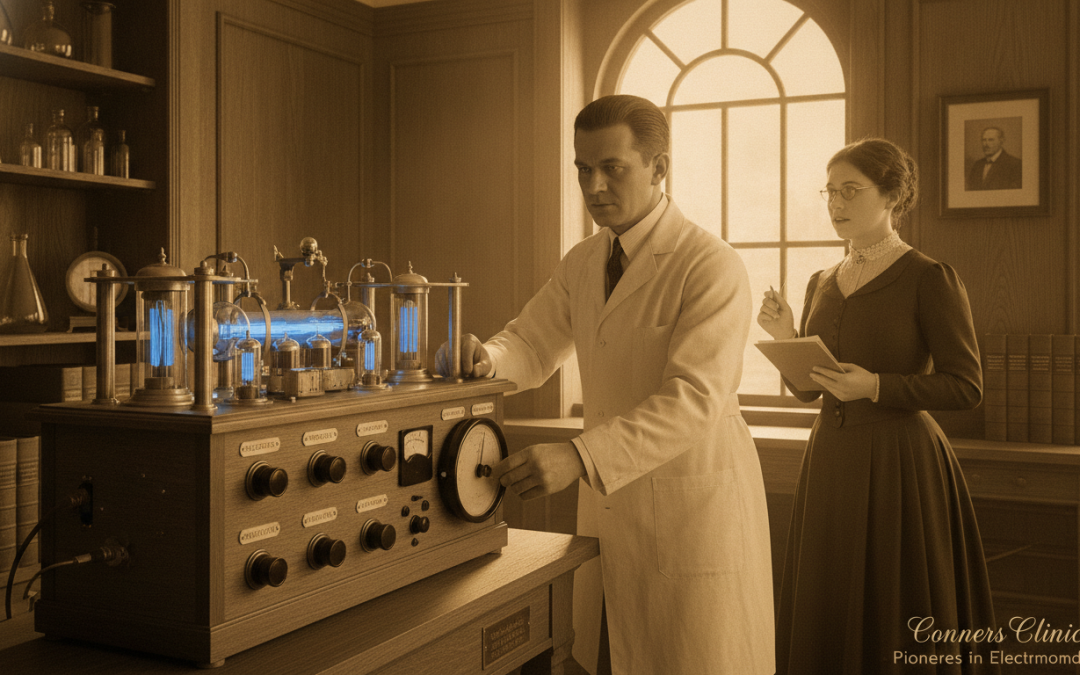
Have you ever felt a spark of hope in the face of overwhelming challenges? This feeling resonates deeply with those who have battled serious illnesses like cancer. Royal Raymond Rife, an American inventor from the 1930s, sought to ignite that spark through his groundbreaking work. His innovations in high-magnification microscopy and electromagnetic devices aimed to tackle the very roots of illness.
As I reflect on Rife’s journey, I invite you to explore the complex history surrounding his inventions. They remain a subject of intense debate in the medical community today. Rife’s efforts to provide alternative paths for those facing cancer resonate with many who seek hope and healing beyond conventional treatments.
In this article, we will delve into Rife’s legacy, examining his contributions and the controversies that surround them. By understanding the past, we can better navigate the current landscape of alternative health options available to patients and their families.
Key Takeaways
- Royal Raymond Rife aimed to address illness through innovative technology.
- His work is intertwined with alternative cancer treatments in the U.S. and Europe.
- The legacy of Rife’s inventions continues to spark debate today.
- Understanding his contributions can help navigate modern alternative health options.
- Exploring Rife’s history provides insights into patient care and support.
Exploring the Royal Rife Machine History
Could it be that our understanding of illness is just the beginning of a much larger story? The legacy of Royal Raymond Rife is often defined by his controversial approach to cancer treatment. His methods diverged significantly from the established medical consensus.
Many advocates believe that Rife’s theories represent a vital part of understanding how microorganisms interact with the human body during periods of illness. They argue that germ theory is only a part of the equation regarding disease.
Supporters suggest that changes in genetic structure can occur in a deficient host environment, making it more susceptible to external bacteria. This perspective emerged during a time of rapid industrial growth in the pharmaceutical sector.
While mainstream science has largely rejected these methods, the debate continues to influence how some individuals approach their personal health journey. We must carefully weigh the historical narrative against modern clinical standards to understand why these alternative methods remain persistent in public discourse.
Uncovering the Life and Work of Royal Raymond Rife
What drives a person to push the boundaries of scientific understanding? For Royal Raymond Rife, born on May 16, 1888, in Elkhorn, Nebraska, the answer lay in his passion for scientific innovation. His journey is marked by remarkable achievements and significant challenges.
During the 1930s, Rife revolutionized microscopy by using movie cameras to capture time-lapse images of microbes. This groundbreaking work showcased his unique ability to blend art with science. A 1944 report from the Smithsonian Institution highlighted the clarity and high magnification capabilities of his specialized microscopes, further solidifying his contributions to the field.
Despite these early successes, Rife faced immense challenges throughout his career. He passed away on August 5, 1971, in El Cajon, California, feeling embittered by the scientific rejection of his work. His life’s journey serves as a poignant reminder of the friction that can occur when unconventional ideas challenge the prevailing scientific paradigms of an era.
How the Royal Rife Machine Works to Target Disease
Could technology offer us a new way to combat diseases that have long plagued humanity? The device created by Rife aimed to harness the power of radio waves to target specific pathogens. This approach was based on what he termed the “Mortal Oscillatory Rate” of microorganisms.
The core technology behind Rife’s device involved the following:
- The use of radio frequencies to disrupt the cellular function of pathogens.
- Devices designed to devitalize disease organisms, a highly debated concept in modern oncology.
- Proponents claim these frequencies can disable microorganisms, although mainstream science has found no reliable evidence to support these claims for cancer treatment.
- It’s crucial to differentiate between Rife’s original experimental devices and later machines marketed for various diseases.
- Understanding this mechanism requires insight into how these devices interact with the biological terrain of the human body.
| Aspect | Rife’s Concept | Mainstream View |
|---|---|---|
| Technology | Radio frequencies targeting pathogens | Lack of scientific validation |
| Effectiveness | Potential to disable microorganisms | No reliable evidence for cancer treatment |
| Device Types | Experimental original devices | Commercially marketed machines |
For more information on the claims surrounding this technology, you can explore this resource.
Alternative Cancer and Disease Treatments: A Closer Look
What if the tiniest organisms in our bodies play a larger role in our health than we realize? The study of microorganisms has become a significant part of the conversation around cancer and other diseases.
Research indicates that approximately 15 to 20 percent of all cancers are caused by infections. This statistic fuels interest in microbial-based theories. However, while microorganisms are often found in the cells of individuals with various diseases, their role as a primary cause remains a subject of debate.
The theory suggests that these entities can be manipulated or reconstituted in lab environments, a concept central to the work of Rife. Furthermore, it is believed that these organisms can take advantage of a weakened system to proliferate within the host.
We must approach these findings with caution. The link between specific microbes and the development of cancer is complex and not fully understood.
| Aspect | Microorganism Role | Current Understanding |
|---|---|---|
| Cancer Link | 15-20% of cancers linked to infections | Complex relationship with disease |
| Microorganisms | Found in various diseases | Debate on primary cause |
| Research Focus | Manipulation in lab settings | Need for cautious interpretation |

Step-by-Step Guide on Using a Rife Machine
Could proper guidance be the key to safely navigating the use of health technology? When considering the use of devices for health purposes, especially those related to disease treatment, preparation is crucial.
Here are some essential steps to follow:
- Before you consider the use of any electronic device for health purposes, it is critical to consult with a licensed medical professional.
- Safety is paramount, especially for those managing a terminal disease like cancer, where conventional therapies have been proven to save lives.
- Many practitioners recommend a thorough preparation process, ensuring that the device is calibrated correctly to avoid any potential electrical hazards during operation.
- I advise users to be wary of operating techniques that promise miraculous results, as these often lack the backing of rigorous clinical trials.
- Always prioritize your overall health strategy by integrating these methods only under the guidance of a qualified and transparent healthcare provider.
Finding Your Rife Machine: Where to Buy and What to Consider
In a world filled with health options, making informed choices about treatment devices is crucial. When searching for a Rife machine, it’s essential to consider trusted sources and reputable sellers.
For specific offerings, you may visit the Conners Clinic. They provide a range of devices designed for various health needs.
However, it is vital to verify the source of your equipment. The market is filled with content that may not meet safety or quality standards. I encourage you to gather as much information as possible before making a purchase. Some devices have been linked to legal issues and health fraud.
The interest in these machines has led to a wide range of products. Be cautious to avoid devices that promise a cure for cancer or other serious diseases. Always ensure that the use of any purchased device is part of a broader, safe, and medically supervised treatment plan.

Current Perspectives on Royal Rife’s Legacy and Impact
How does the narrative of Royal Raymond Rife shape our understanding of alternative health practices today? The legacy of Royal Raymond Rife continues to spark intense debates. This was evident when approximately 300 people attended the 2006 Rife International Health Conference in Seattle to discuss his devices.
I observe that while mainstream medical organizations remain skeptical, there is a persistent interest in his work among those seeking alternative cancer support. The medical community often points to the lack of peer-reviewed evidence as the primary reason for the rejection of these devices.
Despite this, the story of Raymond Rife remains a compelling narrative about the intersection of genius, controversy, and the desire for healing. We must continue to evaluate his impact through the lens of modern scientific rigor to ensure that patients are protected from misinformation.
- The legacy of Rife sparks ongoing debates within the medical community.
- Many individuals are still interested in alternative treatments inspired by his work.
- Critics highlight the absence of scientific validation for his devices.
- Rife’s story illustrates the complexities of healing and innovation.
- Modern evaluations of his work can guide safe patient practices.
Bringing the Past into the Present: Reflections and Future Directions
As we reflect on the evolution of health technologies, we uncover valuable lessons for our future. The work of Rife has undeniably left a mark on alternative medicine.
Moving forward, we must use the lessons of the past to guide our health decisions. Being part of a well-informed community helps us navigate the complex information surrounding these devices.
The content we consume should always be scrutinized, especially when it concerns the delicate balance between innovation and patient safety. Over time, our understanding of disease will continue to evolve.
It is my hope that we approach these developments with both compassion and scientific integrity.
FAQ
What is the Royal Rife machine used for?
The device is often used as an alternative treatment for various diseases, particularly cancer, by targeting microorganisms believed to contribute to these conditions.
How does the Rife machine work?
It operates by emitting specific frequencies that are thought to resonate with harmful microorganisms, potentially disrupting their function and promoting healing.
Is there scientific evidence supporting the use of the Rife machine?
While some users report positive experiences, the scientific community remains divided, with many studies lacking rigorous validation of its effectiveness.
Can anyone use a Rife machine?
Generally, it is recommended that individuals consult with a healthcare professional before using the device, especially if they have existing health conditions.
Where can I purchase a Rife machine?
Rife machines can be found through various online retailers and specialized health equipment suppliers. It’s essential to research and choose reputable sources.
What are the safety considerations when using a Rife machine?
Users should ensure proper setup, follow operational guidelines, and consult with a healthcare provider to minimize any potential risks.
How does the Rife machine compare to traditional cancer treatments?
Unlike conventional treatments such as chemotherapy or radiation, the Rife machine is considered an alternative approach and should be viewed as a complementary option rather than a replacement.
What challenges did Royal Raymond Rife face in his career?
Rife encountered significant skepticism from the medical community, regulatory challenges, and difficulties in gaining acceptance for his innovative ideas and technologies.
What is the legacy of Royal Raymond Rife in modern medicine?
His work has sparked ongoing debates about alternative treatments and the role of technology in healing, influencing both enthusiasts and skeptics in the medical field.