

Many of us have faced moments in life that challenge our health and well-being. The search for answers can feel overwhelming, especially when it comes to serious illnesses. As someone deeply invested in understanding alternative therapies, I want to guide you through the complexities of the Rife machine and its potential role in cancer care.
In the 1920s, Royal Raymond Rife introduced a device that sparked significant debate about its ability to address various medical conditions. Today, individuals continue to explore the possibility of using low-energy electromagnetic waves to improve their health. However, it’s crucial to approach these claims with a discerning eye.
While hope is essential, I believe it’s vital to consult with healthcare professionals before considering such therapies. My aim is to provide an objective overview of how this technology interacts with the body. With the right information, you can make informed decisions that prioritize your health and well-being.
Key Takeaways
- Understanding the history and claims surrounding the Rife machine is essential.
- Consulting with medical professionals is crucial before pursuing alternative therapies.
- Evaluating how the device interacts with the body can help in making informed choices.
- Hope and skepticism can coexist in the search for health solutions.
- Knowledge empowers you to prioritize your overall well-being.
Unveiling the Royal Rife Machine: Historical Insights and Innovations
Throughout history, individuals have grappled with health challenges that prompt exploration of innovative solutions. One such innovator was Royal Raymond Rife, who made significant strides in the 1920s. He developed the frequency generator, which he claimed could diagnose and eliminate various diseases.
Rife’s work was influenced by Dr. Albert Abrams, who previously proposed similar ideas about curing ailments through radionics. During the 1930s, Rife utilized advanced optical microscopes to visualize microbes, asserting that specific vibrations could destroy them.
However, the journey of these machines was not without controversy. The American Medical Association condemned early frequency generators for lacking scientific rigor. Moreover, independent researchers later struggled to replicate Rife’s findings, raising questions about the efficacy of his claims.
| Year | Event | Significance |
|---|---|---|
| 1920s | Rife develops frequency generator | Claims to target specific pathogens |
| 1923-1924 | Scientific American investigation | Condemns similar devices as unsubstantiated |
| 1930s | Rife uses optical microscopes | Visualizes microbes linked to diseases |
Exploring royal rife machine cancer treatment: Efficacy and Challenges
In the quest for effective health solutions, patients often encounter a myriad of options. Among these, the Rife machine stands out, attracting attention for its purported ability to address serious illnesses. However, the claims surrounding its efficacy require careful scrutiny.
Despite widespread assertions that a Rife machine can cure cancer, reputable scientific evidence does not support these claims. Organizations like Cancer Research UK warn that opting for unproven machines over established cancer treatments can jeopardize a patient’s long-term health. This highlights the importance of relying on treatments that have undergone rigorous testing.
When comparing alternative methods to conventional cancer therapies, the latter consistently show validated safety and effectiveness. Many testimonials tout the Rife machine as a miracle solution, yet they often lack the clinical data necessary for oncologists to endorse them. In fact, a notable analysis from 2013 revealed no credible evidence supporting the use of these devices on cancer cells.
I encourage patients to consider the risks of delaying standard medical care in favor of unproven methods. This choice can lead to a higher risk of disease progression, underscoring the need for informed decision-making.
Scientific Insight: Mechanism, Research, and Clinical Evidence
The journey toward understanding health challenges often leads us to explore new avenues. One area of interest is how electromagnetic frequencies interact with cancer cells. Researchers are actively studying these interactions to uncover potential therapeutic benefits.
Studies have shown that specific frequencies can disrupt the mitotic spindle of cancer cells. This disruption may inhibit their growth. For instance, Barbault et al. identified tumor-specific frequencies in 163 patients, conducting trials with the TheraBionic device.
In laboratory settings, a 2012 study confirmed that certain frequencies could prevent cancer cells from growing without harming normal tissue. Additionally, a 2011 phase I/II study on hepatocellular carcinoma indicated that 19.5% of patients achieved significant responses.
| Study Year | Focus | Findings |
|---|---|---|
| 2011 | Hepatocellular Carcinoma | 19.5% of patients showed objective responses |
| 2012 | Laboratory Study | Specific frequencies inhibited cancer cell growth |
| Ongoing | Electromagnetic Frequencies | Further research is needed to validate efficacy |
Safety, Side Effects, and Regulatory Perspectives
In the realm of health care, discerning the safety of treatment options is essential for informed choices. While many individuals seek alternative therapies, it’s important to understand the potential risks involved.
Some users have reported adverse effects, including painful electrical shocks and skin rashes, particularly when using low-quality devices. The American Cancer Society cautions that alternative therapies often lack the safety oversight found in standard medical treatments.
- Though proponents claim minimal side effects, reports of skin irritation and discomfort do exist.
- The electromagnetic waves emitted by these devices are typically weak, but poor construction can lead to unpredictable effects on the body.
- It’s crucial to remember that there is no regulatory standard for manufacturing these devices.
- If you are currently undergoing cancer care, discuss any alternative device use with your doctor to avoid potential interactions.
- Research indicates that while some patients report symptom relief, these outcomes often lack rigorous clinical evidence.
- Each person’s body may react differently to electrical impulses, with skin rashes being a documented risk of improper use.

For more detailed insights on this topic, you can refer to Cancer Research UK’s overview of alternative.
Where to Buy Your Royal Rife Machine and Considerations
Navigating the world of alternative therapies can be daunting for those seeking health solutions. When considering a Rife machine, it’s essential to know where to purchase a reliable device.
Authorized Retail Outlets and the Conners Clinic Link
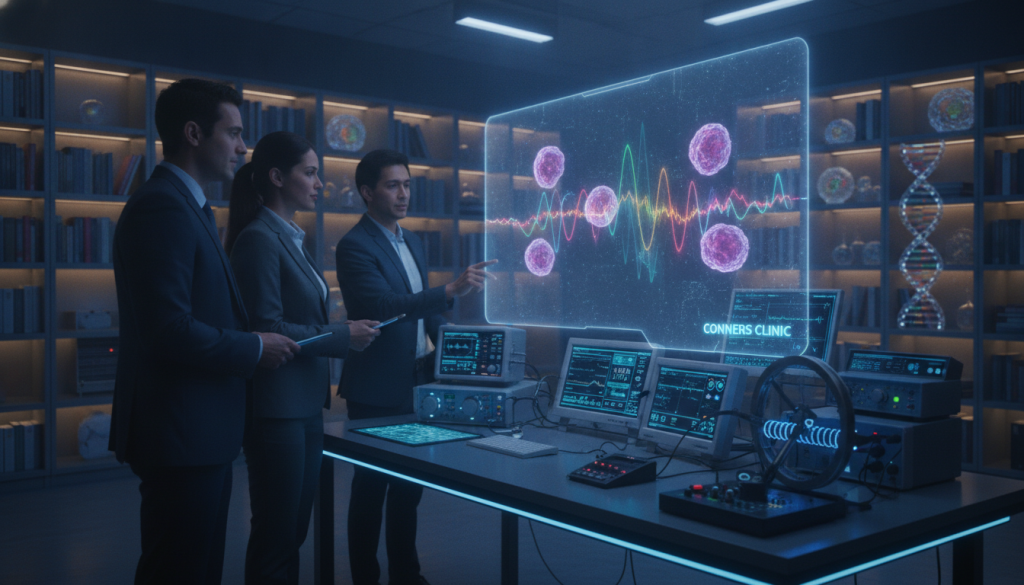
If you are looking for a reputable source, you can explore the programmed rife machine options at Conners Clinic.
Quality, Construction, and Evaluation Tips
When purchasing Rife machines, it is critical to evaluate the quality of construction. Low-quality devices may pose electrical safety risks to patients. Here are some tips to consider:
- Prioritize devices with clear documentation, as many generic machines lack safety certification.
- Understand that these devices are not substitutes for professional cancer care.
- Be skeptical of marketing claims that promise cures without verifiable clinical data.
- Verify the manufacturer’s reputation, as the efficacy of any treatment depends on the precision of the components.
Future Prospects and Innovations in Electromagnetic Frequency Therapy
As we look to the future, the integration of technology in health management is becoming increasingly significant. Emerging research is focusing on how low-energy electromagnetic waves can be integrated into existing cancer therapies to enhance patient outcomes.
Many people are hopeful that new therapy devices will eventually provide a non-invasive way to manage disease symptoms alongside standard medical care. As we advance, studies are exploring how specific frequency modulation can enhance the body’s natural ability to fight cancer cells more effectively.
I believe that the future of cancer treatments lies in the synergy between high-energy radiotherapy and low-energy electromagnetic frequency applications. While current claims about these devices remain largely unproven, ongoing clinical trials are essential to validate the potential benefits for future patients.
By combining modern technology with traditional health strategies, we may one day see a more holistic approach to managing complex disease states.
Final Reflections on Advancing Cancer Treatment Options
The path to understanding health solutions can often be complex and filled with uncertainty. Navigating the world of alternative therapies requires a careful balance of open-mindedness and a strict adherence to scientific evidence.
While the history of frequency therapy is fascinating, it is imperative to rely on proven medical protocols when managing a serious disease. I encourage all patients to maintain a dialogue with their oncology team before integrating any new device into their personal health regimen.
The lack of robust evidence for these devices serves as a reminder that not all innovative ideas translate into effective clinical practice. Ultimately, your journey toward healing should be supported by therapies that have been rigorously tested for both safety and long-term efficacy.
FAQ
What is the purpose of using frequency therapy in health treatments?
Frequency therapy aims to promote healing by using specific electromagnetic frequencies to target and potentially disrupt abnormal cell activity, enhancing overall wellness.
Are there any clinical trials supporting the efficacy of these devices?
Some studies have explored the effects of electromagnetic frequencies on various health conditions, but more comprehensive clinical trials are needed to establish conclusive evidence.
What are the potential side effects of using these devices?
Reported side effects can vary but may include mild discomfort or skin irritation. It’s essential to consult with a healthcare professional before starting any new therapy.
How do these devices compare to traditional cancer treatments?
While some individuals seek alternative therapies, traditional treatments like chemotherapy and radiation have a more extensive body of evidence supporting their efficacy in cancer care.
Where can I find reliable information about purchasing these devices?
It’s advisable to research authorized retailers and consult healthcare professionals for recommendations on reputable sources for these devices.
What advancements are being made in frequency therapy?
Emerging research is exploring innovative applications of electromagnetic frequencies, aiming to integrate these therapies with conventional medical practices for enhanced patient care.
Can these devices be used alongside conventional cancer treatments?
Many patients consider using alternative therapies in conjunction with traditional treatments, but it’s crucial to discuss this approach with a healthcare provider to ensure safety and effectiveness.